How to Winterize Outdoor Faucets (Step by Step, Before the First Freeze)
We pick products independently. When you buy through our links, we may earn a commission.
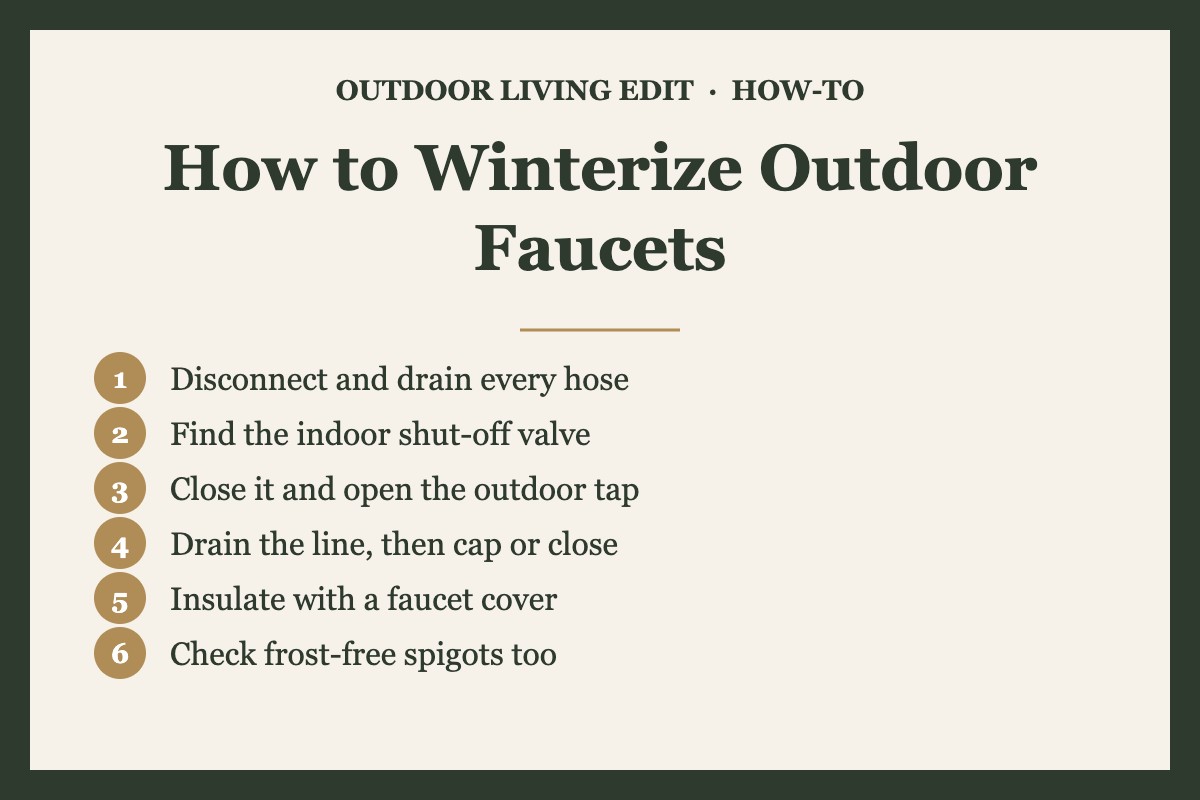
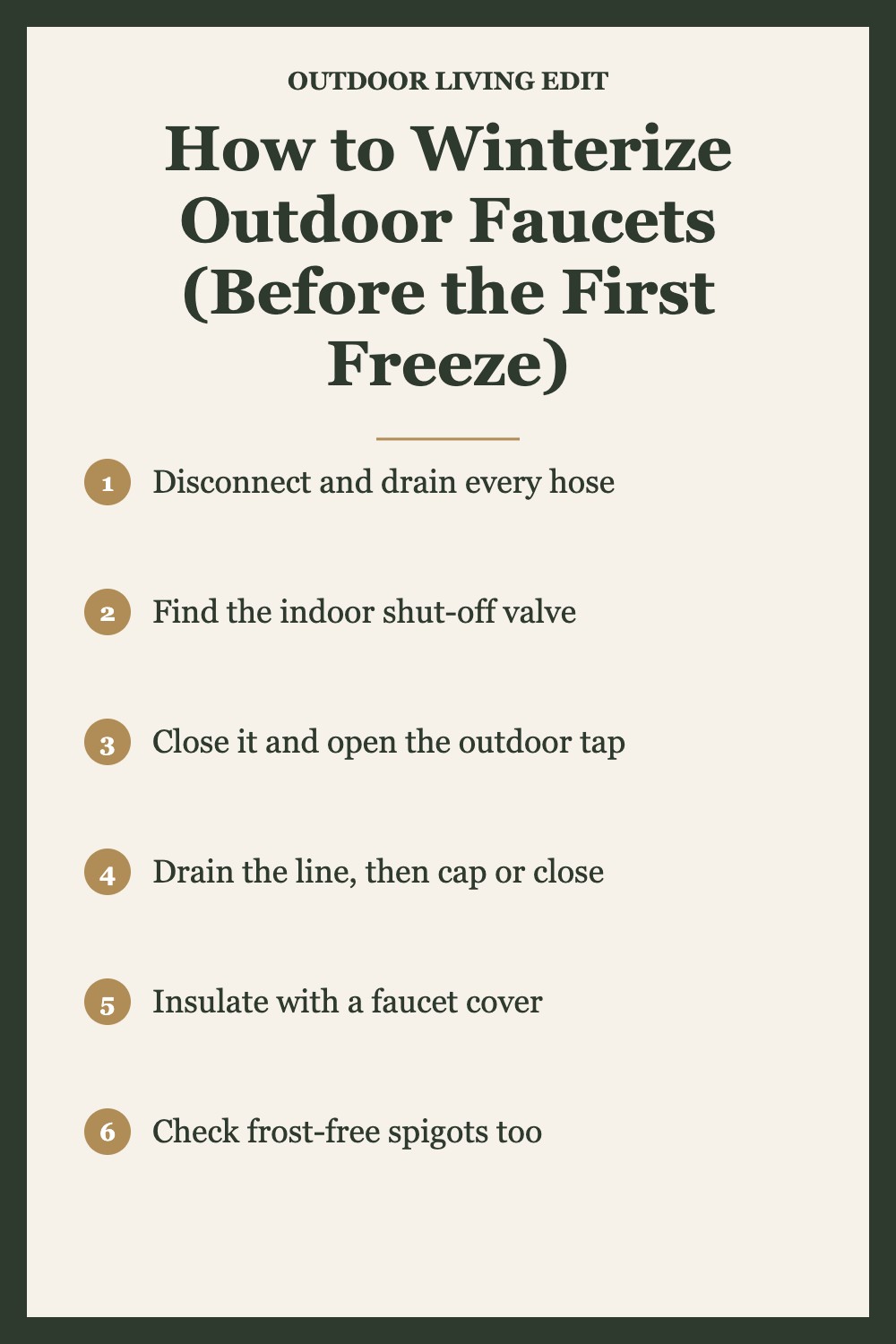
Before the first hard freeze, disconnect every hose, close the indoor shut-off valve that feeds each outdoor faucet, open the outdoor tap to drain the line, and cover the spigot with an insulated faucet cover. Frost-free spigots still need the hose removed to drain properly.
A frozen outdoor faucet is one of the most common (and most avoidable) winter plumbing problems. When water trapped in the pipe freezes, it expands, and the crack it causes often stays hidden until spring, when you turn the water back on and it runs into the wall instead of out of the spout. Winterizing takes about 15 minutes per faucet and costs little or nothing. Here is exactly how to do it.
When to winterize outdoor faucets
Do it before the first night forecast to drop below freezing, and ideally before nights in the mid-20s °F, when pipes are at real risk. In much of the northern US that means October or early November; in milder zones it may be December. The Farmers’ Almanac publishes average first-frost timing by state, which is a good guide. If you also have an irrigation system, winterize it the same weekend; see our guide to how to winterize a sprinkler system.
What you need
- A bucket and an old towel
- Insulated faucet covers (one per outdoor spigot)
- A flashlight for finding the shut-off valve in a basement or crawl space
- Optional: an adjustable wrench and a bib cap or drain cap
Step 1: Disconnect and drain every hose
Unscrew every garden hose, splitter and timer from the faucet. A connected hose traps water in the spigot, which can freeze back into the pipe even on a frost-free model. Drain the hose by stretching it out on a slope, then coil it and store it in a garage or shed.
Step 2: Find the indoor shut-off valve
Most outdoor faucets have a dedicated shut-off valve inside the house, on the same pipe, usually in the basement, crawl space or utility room within a few feet of the exterior wall. It may be a round gate valve, a lever-style ball valve or, in some homes, a valve with a small drain cap on its side (sometimes called a bleeder valve). If you can’t find one, trace the pipe back from the wall where the faucet exits.
Step 3: Close the valve and open the outdoor tap
Turn the indoor valve fully closed (clockwise for a round handle, or perpendicular to the pipe for a lever). Then go outside and open the outdoor faucet all the way. Water left in the line between the valve and the spout will drain out. Leave the outdoor tap open for now.
Step 4: Drain the line, then close or cap it
If your indoor valve has a bleeder cap, hold a bucket under it and unscrew the cap to let the remaining water out, then replace it. Once nothing more drips from the outdoor spout, most plumbers and manufacturers recommend leaving the outdoor faucet open through winter so any trace of water has room to expand. Check your faucet’s instructions if you are unsure.
Step 5: Insulate with a faucet cover
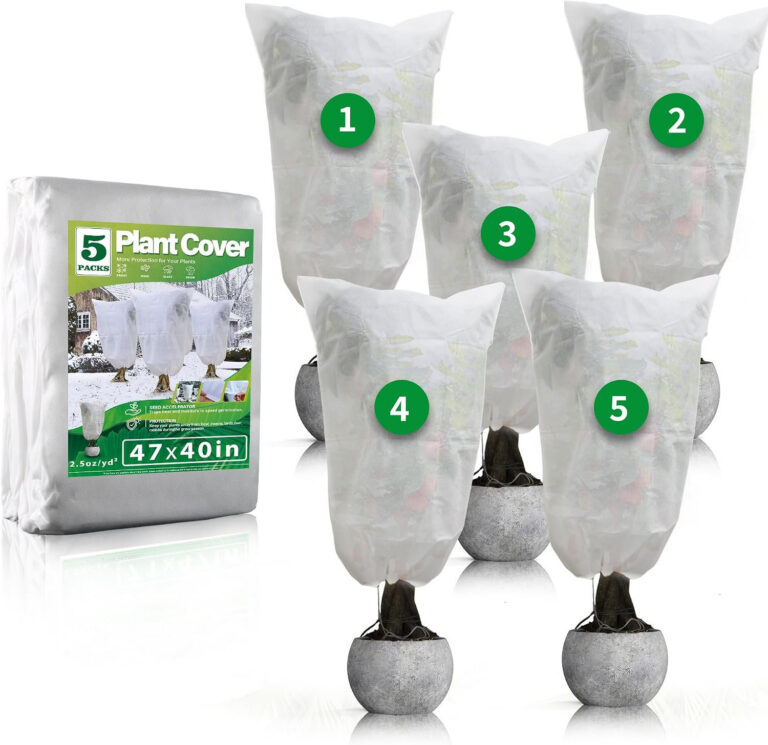
Slip an insulated foam or fabric faucet cover over the spigot and tighten its cord or strap so it sits flush against the wall. Covers are inexpensive and add a layer of protection against wind chill. They are not a substitute for shutting off and draining the line on a standard hose bib, but they are the right extra step for frost-free spigots and for homes without an indoor valve.
Step 6: Don’t skip frost-free spigots
A frost-free spigot (also called a frost-proof sillcock) has a long stem that closes the valve inside the heated part of the wall, so the exposed spout drains itself. That only works if the spigot is installed with a slight downward slope and the hose is removed. Disconnect the hose, check that water drains from the spout after you shut it off, and add a cover in very cold climates.
How much does it cost?
Winterizing yourself costs only the price of faucet covers. If you need a new faucet, HomeGuide puts the cost of replacing a standard hose bib at $150 to $350 including labor, with the part itself about $10 to $40; other outdoor spigot types run about $150 to $450 installed. Upgrading to a frost-free spigot can be worth it if you’ve had a faucet freeze before, because it moves the shut-off point inside the warm wall.
Signs your outdoor faucet froze
- Little or no water comes out when you turn it on in spring
- Water drips inside the wall, basement ceiling or crawl space when the faucet is open
- A visible bulge or split in the pipe near the shut-off valve
- Damp drywall, stains or a musty smell near the exterior wall
If you see any of these, close the indoor valve right away and call a licensed plumber.
Finish the rest of your winter yard checklist
While you’re outside, cover or store the furniture. Our guides to storing outdoor furniture for winter and the best patio furniture covers cover what to bring in and what can stay out. Gardeners should also read how to protect plants from frost.
The Edit, in your inbox
New reviews, the best outdoor deals and seasonal ideas. Once a week.
The bottom line
Winterizing an outdoor faucet is a 15-minute job that prevents a costly leak: remove the hose, close the indoor shut-off, open the outdoor tap to drain the line, and add an insulated cover. Do it before the first hard freeze, and in spring, reverse the steps and check for leaks inside before you call it done.
FAQ
After shutting off the indoor valve and draining the line, leave the outdoor faucet open so any remaining water has room to expand. Close it again in spring before reopening the indoor valve.
Yes, lightly. Remove the hose so the spigot can drain, confirm water drains out after you shut it off, and add a faucet cover in very cold climates. A hose left attached is the most common reason frost-free spigots crack.
Disconnect the hose, drain the faucet as much as possible and use an insulated cover. Then consider having a plumber add a shut-off valve or install a frost-free spigot before next winter.
Water freezes at 32 °F, but exposed pipes are most at risk during sustained cold, especially overnight lows in the 20s °F or below and windy conditions. Winterize before the first hard freeze rather than waiting for it.
HomeGuide estimates $150 to $350 to replace a standard hose bib, including labor. Repairs that involve a split pipe inside the wall or water damage cost more.