
We pick products independently. When you buy through our links, we may earn a commission.
Enter your bed’s size and the depth you want to fill, and this calculator tells you how much soil to buy in cubic feet, cubic yards, liters and bags. It also splits the total into two popular raised bed mixes. Planning a new bed? Start with our guide to how to build a raised garden bed.
Topsoil and compost blend (60/40):
Mel’s Mix (equal thirds):
A 4 x 8-foot raised bed filled 12 inches deep needs 32 cubic feet of soil, about 1.2 cubic yards, or 22 bags of 1.5 cubic feet. A 4 x 4-foot bed at the same depth needs 16 cubic feet (11 bags).
How the raised bed soil calculator works
Soil volume is length x width x depth. Because beds are measured in feet and depth in inches, the calculator divides the depth by 12 first: a bed that’s 8 feet long, 4 feet wide and 12 inches deep holds 8 x 4 x 1 = 32 cubic feet. For a round bed, it uses the area of a circle (3.1416 x radius squared) instead of length x width.
To convert, there are 27 cubic feet in a cubic yard and about 28.3 liters in a cubic foot. Bag counts are rounded up, because you can’t buy part of a bag. New soil settles after the first few waterings, so many gardeners buy about 10% extra; tick the settling box to include it.
How deep should a raised bed be?
Most vegetables and flowers grow well in 10 to 12 inches of soil. Shallow-rooted crops like lettuce, spinach, radishes and herbs can manage in 6 to 8 inches. Deep-rooted crops such as tomatoes, carrots, potatoes and squash do best with 12 to 18 inches or more. If your bed sits on good native soil, roots can grow down into it, so you can fill a little shallower. On a patio or over hard clay, fill the full depth.
What soil mix to use
Topsoil and compost (about 60/40). A common, budget-friendly blend: screened topsoil for structure, compost for nutrients and drainage. Bagged “raised bed soil” is usually a ready-made version of this.
Mel’s Mix (equal thirds). The blend from Mel Bartholomew’s Square Foot Gardening method: one-third compost, one-third peat moss or coco coir, and one-third vermiculite. It’s light, drains well and is a good choice for elevated and patio planters, but it costs more per cubic foot.
Avoid filling a bed with plain bagged potting mix (it’s expensive at bed scale and breaks down quickly) or with straight topsoil (it compacts). Top up with 1 to 2 inches of compost each spring.
Save money on a deep bed: fill the bottom first
For beds deeper than 18 inches, you don’t need premium soil all the way down. Many gardeners fill the bottom third with untreated logs, branches, leaves and grass clippings (sometimes called hugelkultur), then add soil on top. It saves on soil and breaks down into organic matter over time. Expect the level to sink as it decomposes and top it up each season.
Raised beds we like
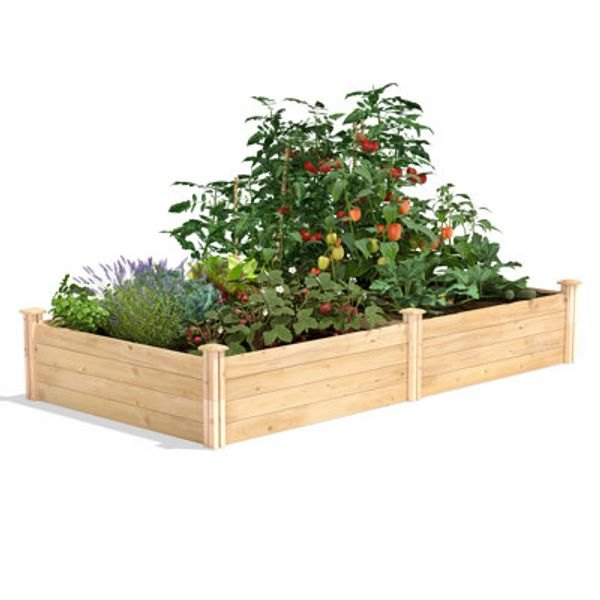
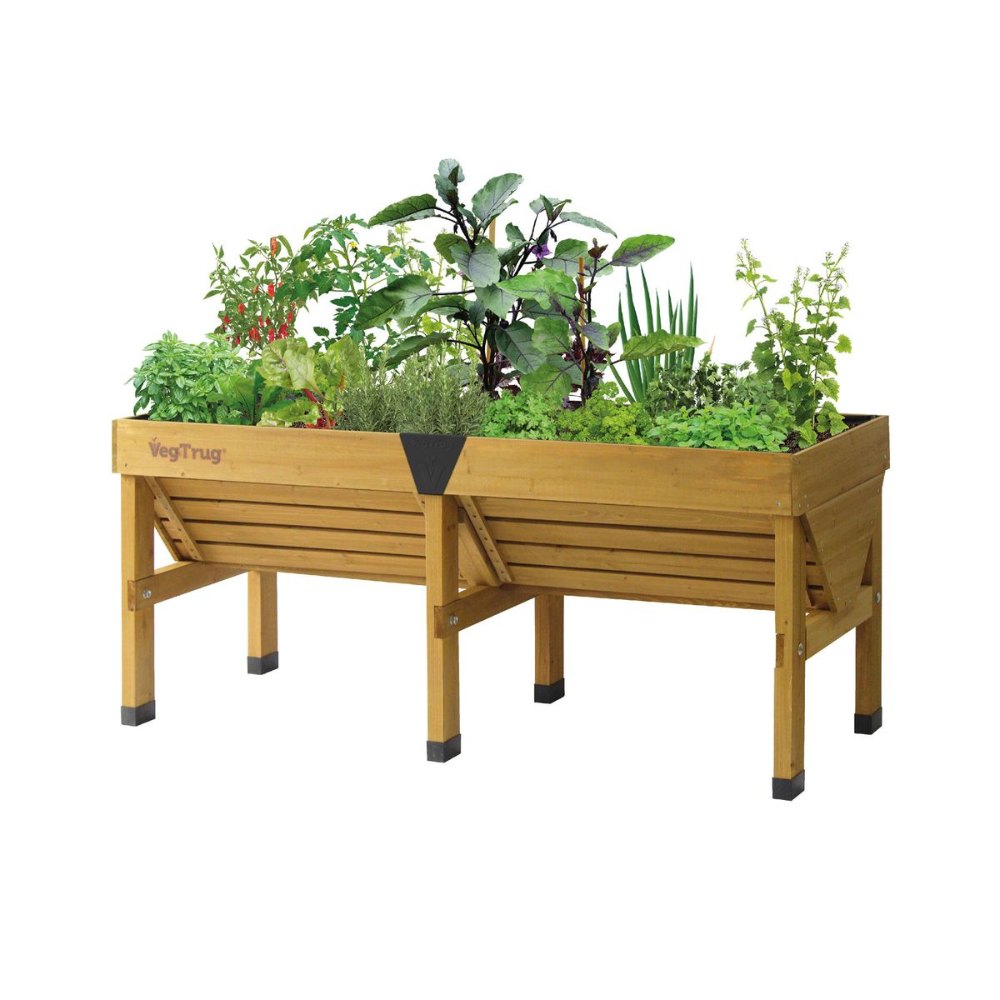
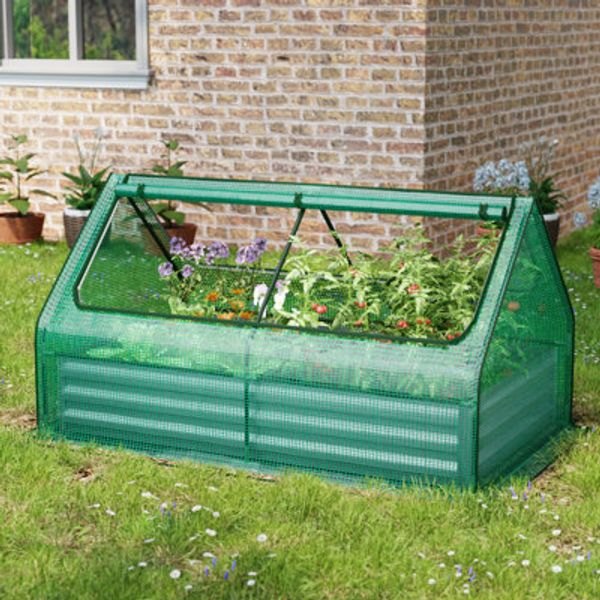
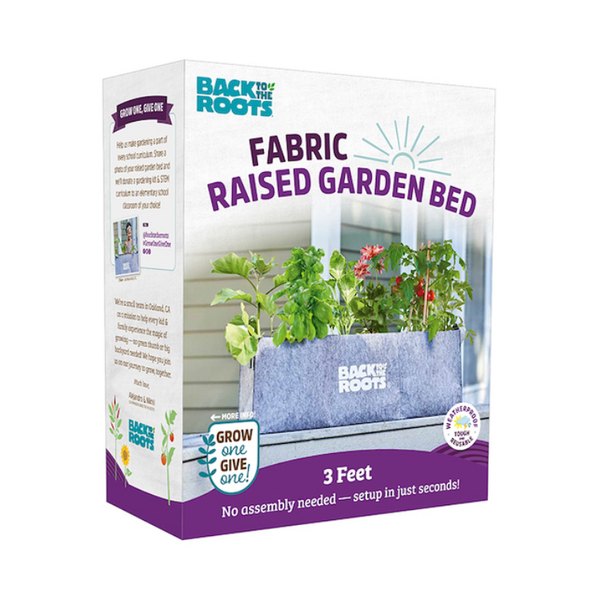
Ready to build? These are kits we’d buy, from a classic cedar bed to an elevated planter you can use on a patio. See more in our raised garden bed guide and the Garden & Lawn shop.
FAQ
A 4 x 8-foot bed filled 12 inches deep needs 32 cubic feet of soil: 22 bags of 1.5 cubic feet, 32 bags of 1 cubic foot, or 16 bags of 2 cubic feet. Add about 10% if you want extra for settling.
Multiply length x width x depth in feet to get cubic feet, then divide by 27. A 4 x 8-foot bed at 12 inches deep is 32 cubic feet, which is about 1.2 cubic yards.
For one or two small beds, bags are usually simpler. Once you need about 2 cubic yards or more, bulk soil delivered by the yard is usually cheaper, though there is often a delivery fee.
At 12 inches deep, a 4 x 4-foot bed needs 16 cubic feet of soil, about 0.6 cubic yards or 11 bags of 1.5 cubic feet.
On a lawn, lay cardboard to smother grass and weeds before filling. Hardware cloth stops burrowing pests. In deep beds you can fill the bottom with logs and leaves to cut soil costs.